


Komatsu Water Pump Replacement: The Complete 2026 Guide for Aussie Operators

What if a single failing seal is the only thing standing between your project deadline and a catastrophic engine rebuild in the middle of a 42-degree Queensland summer? It's a nightmare every operator dreads, especially when you're working on a remote site where mechanical help is hours away. You already know that sourcing the right Komatsu water pump parts and catching early warning signs is the difference between a quick fix and weeks of expensive, unplanned downtime! With the Australian heavy machinery market continuing its massive growth through 2026, staying ahead of maintenance is the only way to keep your business moving.
We understand that you need reliability without the confusing technical jargon or sourcing delays. This guide is designed to help you master the signs of cooling system failure and provides a clear, step-by-step replacement process to get your gear back on the job quickly! You'll learn how to identify weeping holes before they become floods, understand the value difference between genuine and high-quality aftermarket options, and ensure your cooling system meets the rigorous demands of the modern Aussie worksite. Let's get your Komatsu back to peak performance and protect your bottom line!
Key Takeaways
Learn how to identify early warning signs like weep hole leakage to prevent catastrophic overheating in harsh Aussie conditions.
Master the art of sourcing high-quality Komatsu water pump parts by comparing bearing grades and seal materials for maximum engine longevity.
Discover the essential heavy-duty toolkit and safety protocols needed to organise a smooth, professional-grade replacement on-site.
Follow a streamlined step-by-step process for draining, removing, and installing your pump to minimise unplanned downtime.
Ensure a successful cooling system reset with post-installation static leak tests and temperature monitoring to keep your gear running cool!
Table of Contents
Spotting the Signs: When Your Komatsu Water Pump is On the Way Out
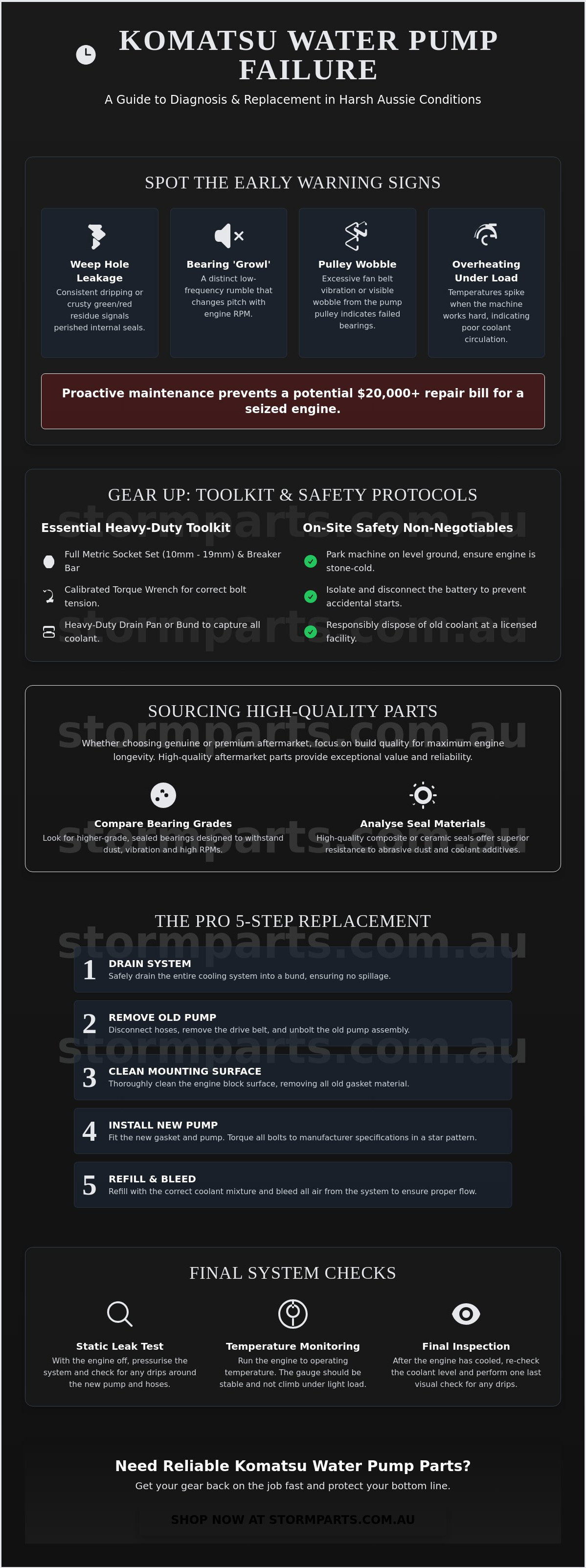
Your Komatsu engine is a workhorse, but even the toughest machinery has a breaking point when the cooling fails. Don't wait for a red light on the dash to tell you there's a problem! By then, you're often looking at a $20,000 repair bill for a seized engine or a warped cylinder head. Catching a fault early starts with a simple walk-around. Look closely at the weep hole on the pump housing. While a tiny bit of dampness might be normal, any consistent dripping or green or red crusty buildup means your internal seals have perished. This is the moment to start looking for high-quality Komatsu water pump parts before a small leak turns into a site-stopping disaster.
Australian dust is particularly brutal on these components. Fine silica particles from the Pilbara or Western Queensland find their way into every crevice, acting like sandpaper against the pump's shaft seals. Once that seal is compromised, coolant escapes and your engine's ability to shed heat vanishes. A healthy engine cooling system relies on the pump to circulate fluid at a specific flow rate. If the impeller is eroded or the shaft is slipping, that flow drops, and your temps will spike the second you put the machine under load.
Keep your ears open for the "growl" of a failing bearing. It's a distinct, low-frequency rumble that changes with engine RPM. If you notice the fan belt vibrating excessively or the water pump pulley wobbling, the internal bearings are likely shot. This isn't just a noise issue; a seized bearing can snap a drive belt, taking out your alternator and cooling fan in one go!
The Aussie Heat Factor: Why Cooling Matters More Here
Operating in 40-degree ambient temperatures puts immense pressure on your cooling system. When the outside air is scorching, the pressure inside your radiator and pump increases significantly. It makes every weak point in the system more vulnerable! Before you swap any parts, check your coolant concentration. If it's too diluted, the boiling point drops, causing cavitation that pits the pump's internal surfaces. A reliable pump must work harder in Australia to maintain radiator efficiency compared to cooler climates.
Troubleshooting: Is it the Pump or a Hose?
Don't start pulling bolts until you're sure. Pressure testing the system is the most reliable way to isolate a leak. Sometimes a loose clamp or a hairline fracture in a bottom hose can mimic a pump failure. While you're under the hood, inspect these key areas:
Fan Drive: Check for play in the fan hub that might be putting uneven stress on the pump shaft.
Drive Belts: Look for glazing or fraying that suggests the pump is harder to turn than it should be.
Internal vs External: If you're losing coolant but the pump looks dry, you might have an internal leak through the oil cooler or head gasket.
Preparation and Essential Tools for a Smooth Replacement
Preparation is the backbone of a successful fix. You don't want to be halfway through removing a housing only to realise you're missing a specific metric socket or a fresh gasket! Start by parking your machine on level ground. Isolation is vital for your safety. Ensure the battery is disconnected and the engine is stone-cold before you even touch a wrench. Working on a pressurised, hot cooling system is a recipe for severe burns, and we want to get you back to work in one piece!
Capturing old coolant is a non-negotiable step for any professional operator. Use a clean, heavy-duty drain pan or a bund to catch every drop. Under the Australian heavy vehicle safety standards, maintaining your equipment to a high level of mechanical integrity is a core requirement for compliance. Responsible disposal of hazardous waste at a licensed facility isn't just about the law; it's about looking after our local environment. Once the system is drained, take a moment to degrease the area around the pump. This prevents that notorious Aussie red dirt from falling into the engine block and contaminating your new Komatsu water pump parts.
The Tool List: What You’ll Need in Your Service Ute
Your toolkit needs to be ready for heavy-duty work. You'll require a full metric socket set, as most Komatsu water pumps are secured with 10mm to 19mm bolts. A torque wrench is essential for the final fitment to prevent over-tightening and cracking the housing. Grab a quality gasket scraper to clean the mating surfaces, but be gentle! Avoid using a screwdriver, as gouging the aluminium will lead to permanent leaks. A coolant refractometer is also a brilliant addition to ensure your new mix is perfect for high-ambient temperatures.
Organising Your Parts Before You Start
Always verify your part numbers against your specific engine serial number before you begin. Komatsu often updates component designs mid-production, and having the wrong pump on the bench while your machine is in pieces is a massive headache. If you're unsure about compatibility, you can check our expert-sourced Komatsu engine parts to find exactly what you need. Inspect the new pump’s impeller for any casting flaws and ensure your O-rings are fresh and pliable. Having everything laid out on a clean rag makes the installation move much faster!
Sourcing the Right Part: Genuine vs. Quality Aftermarket
Every operator eventually faces the same dilemma: do you pay the premium for genuine, or roll the dice on aftermarket? While genuine components are built to strict factory specs, the price can often sting. High-quality aftermarket Komatsu water pump parts provide a brilliant middle ground, offering the same reliability without the "brand name" tax. The trick is knowing how to spot a quality component from a budget knock-off that'll fail in a fortnight!
When you're inspecting a potential replacement, focus on the weight and casting. A quality pump feels substantial because it has thicker walls to resist cavitation and heat stress. Check the impeller design; it should be precision-balanced to prevent shaft wobble. Most importantly, ensure the bearings are rated for high-load industrial use. Meeting heavy vehicle thermal management requirements is a complex engineering task, and a sub-par pump simply won't circulate enough coolant to keep your engine in the safe zone during a scorching Aussie summer. You need a part that can handle the pressure when the mercury hits 40 degrees!
Why "Cheap" Parts Cost More in the Long Run
A "bargain" pump often uses inferior seal materials that perish the moment they hit operating temperature. You'll see immediate weeping from the hole we mentioned earlier, which means you're doing the whole job twice! Even worse, a poorly designed impeller can actually break apart, sending metal shards through your engine block. The cost of a second replacement and the associated downtime far outweighs the initial savings. Choosing a part backed by local Australian support gives you peace of mind that you're protected if something isn't quite right.
Storm Parts’ Commitment to Komatsu Reliability
At Storm Parts, we don't just shift boxes. We're a Toowoomba-based specialist that understands exactly what Aussie machines go through. Every one of our Komatsu water pump parts is vetted for durability in high-dust, high-heat environments. We focus on providing components that match or exceed original standards because we know your reputation depends on your machine's uptime. Whether you need a single pump or one of our complete engine kits for a total overhaul, we've got the stock and the expertise to get you sorted quickly! We stand by our gear so you can get back to work with confidence.
Step-by-Step: Replacing Your Komatsu Water Pump Like a Pro
Ready to get stuck in? Once you've safely isolated your machine and let the engine cool, the first step is a thorough drain. Don't just pull the bottom radiator hose; make sure you locate and open the engine block drain plugs too. You want every litre of old, potentially contaminated coolant out of the system. While the fluid is draining, clear your workspace by removing any obstructing fan shrouds and the drive belts. This is the perfect time to have your new Komatsu water pump parts laid out and ready for a quick swap!
Removal and Surface Prep
Removing the old pump can be tricky if the bolts have seen years of heat cycles and outback dust. If a bolt feels seized, don't force it and risk a snap! Use a quality penetrating oil and a bit of patience. Once the pump is off, the real work begins with cleaning the mounting face. Use a gasket scraper carefully. You want to remove every trace of old material without gouging the aluminium engine block. Any small scratch can become a high-pressure leak path later. Take a second to look at the old pump's impeller; if it's heavily pitted, you might have a larger issue with coolant chemistry that needs addressing.
Installation and Torque Specs
When you're ready to install, apply a thin, even bead of sealant if the gasket requires it, but don't overdo it! Excess sealant can squeeze into the cooling galleries and clog your radiator. Place the pump and start all bolts by hand to avoid cross-threading. You must tighten these in a "star pattern" to ensure the housing seats perfectly flat against the block. Use your torque wrench to meet the specific factory settings for your model. Once the pump is secure, reinstall your belts and check they're aligned properly on the pulleys. If you're looking for high-quality components to finish the job, order your Komatsu water pump parts from our expert team.
The "While You’re In There" Checklist
Smart operators know that preventing double handling is the key to profitability. While the system is already apart, it's worth checking these critical items:
Thermostat: These are cheap insurance. Replace yours now to ensure the whole system opens and closes exactly when it should.
Radiator Hoses: Squeeze the hoses. If they feel soft, "crunchy", or show any bulging, swap them out before they burst under pressure.
Fan Clutch: Give the fan a spin by hand. It should have a firm, smooth resistance. If it spins freely or feels gritty, it's time for a replacement.
Finally, refill the system with a fresh coolant mix and "burp" the air out. Run the engine with the heater on and the radiator cap off until the thermostat opens. This ensures no air pockets are trapped in the head, which is the number one cause of post-repair overheating!
Post-Installation: Testing and Cooling System Maintenance
The final turn of the wrench is satisfying, but your work isn't finished until the system is proven under pressure! Before you fire up that big diesel, perform a static leak test. Fill the system to the correct level and let it sit for at least 20 minutes while you tidy up your tools. Check every joint, hose clamp, and the pump housing itself for any signs of moisture. It's much easier to nip a loose clamp now than when the engine is at full operating temperature and under load on a remote site.
Once you're satisfied, start the engine and keep a close eye on the temperature gauge for the first hour of operation. Don't just let it idle; once it's warm, put the machine through some light cycles to ensure the new Komatsu water pump parts are circulating fluid effectively. We recommend a strict 50-hour follow-up check. Thermal cycling causes components to expand and contract, which can occasionally settle a gasket or loosen a clamp. A quick five-minute inspection at the 50-hour mark can save you from a massive headache down the road!
Bleeding the Air: A Critical Final Step
Air pockets are the silent killers of new pumps. If an air bubble gets trapped near the impeller, it causes cavitation. This process can pit the metal and destroy your brand-new seals in record time! Most Komatsu engine blocks have specific bleed valves located at the highest points of the cooling circuit. Use these! Open them until a steady stream of coolant appears without any bubbles. Once the thermostat opens and the top radiator hose feels hot, give the system one final top-up to the "Full" mark on the expansion tank.
Long-Term Protection for Your Komatsu Engine
Toowoomba operators know that the dust and heat of the Darling Downs or the Surat Basin require the right gear. Don't just use any old "green" coolant. Stick to the specific grade recommended for Australian mining and construction environments to prevent scale buildup and corrosion. Scheduling a full cooling system flush every 1,000 to 2,000 hours is the best way to protect your investment and maintain the longevity of your engine components. At Storm Parts, we're here to help you organise your maintenance schedule and provide the expert advice you need to stay productive.
Need a reliable replacement? Explore our Komatsu Water Pump range today
Keep Your Gear Cool and Your Projects on Track
Mastering your cooling system maintenance is the smartest way to avoid the massive costs of an engine rebuild. By identifying weep hole leaks early and following a professional installation pattern, you ensure your machinery can handle the most punishing Australian site conditions. Choosing the right Komatsu water pump parts is the foundation of this reliability. It's about more than just a part; it's about the stability of your entire operation!
At Storm Parts, we're proud to be your proactive partner in productivity. As specialists in Komatsu and Volvo engine components, our Toowoomba-based team provides the expert support you need to make the right choice every time. We understand the urgency of your work, which is why we offer rapid dispatch across Australia to keep your downtime to an absolute minimum. Whether you're in a remote mining hub or a busy metro construction site, we've got the gear to get you moving again. For those managing larger site requirements, Armour Corporation provides the industrial electrical engineering expertise needed to keep your entire facility powered and safe.
Ready to secure your engine's longevity? Get Your Komatsu Back on Site – Shop Water Pumps at Storm Parts. You've got the skills to do the job right, and we've got the high-standard components to back you up. Let's get that machine back to work!
Frequently Asked Questions
How long does a Komatsu water pump replacement typically take?
A standard replacement usually takes between three and six hours. This timeframe depends on the specific machine model and how much room you have to work. Excavators often provide better access than tightly packed wheel loaders, but having your tools organised beforehand will always speed up the process.
Can I use tap water in my Komatsu cooling system after a pump change?
You should never use tap water in your engine. The minerals found in Australian tap water lead to scale buildup and internal corrosion that will quickly perish your new Komatsu water pump parts. Always use demineralised water or a high-quality pre-mixed coolant to ensure the longevity of your seals and impeller.
What is the most common cause of water pump failure in heavy machinery?
Seal failure due to contamination is the most frequent culprit. Fine silica dust from Aussie worksites can bypass the outer seals and act like sandpaper against the pump shaft. Once the seal is scored, coolant begins to leak from the weep hole, which is your first sign that a replacement is urgent.
This principle of preventative maintenance applies to all fluid-based systems; for instance, professional plumbing and drain specialists like Roto Pro highlight that catching small leaks early is the key to avoiding catastrophic failures in commercial and residential infrastructure.
Do I need to replace the thermostat every time I change the water pump?
It is highly recommended to swap the thermostat at the same time. Since the cooling system is already drained and the engine is partially stripped, it's a low-cost way to prevent double handling. A fresh thermostat ensures your engine reaches operating temperature correctly and protects your new pump from unnecessary pressure spikes.
What are the torque specifications for Komatsu water pump bolts?
Torque settings vary depending on the engine series, such as the SAA6D107 or SAA6D125. Generally, smaller M8 bolts require approximately 25 Nm, while larger M10 mounting bolts often need 50 Nm. You must check your specific model’s service manual to ensure you don't over-tighten and crack the aluminium housing.
How can I tell if my water pump is leaking internally or externally?
External leaks are visible as coolant dripping from the pump body or staining around the weep hole. Internal leaks are more deceptive and often result in "milky" engine oil or white smoke from the exhaust. If you're losing coolant but the exterior of the pump is bone dry, check your oil dipstick for contamination immediately.
Is it worth buying genuine Komatsu parts for an older machine?
High-quality aftermarket components often provide the best value for older gear. You get the same cooling performance and reliability without the steep price premium of a genuine box. We focus on sourcing Komatsu water pump parts that meet or exceed original engineering standards, ensuring your older machines stay productive for years to come.
Does Storm Parts deliver Komatsu components outside of Queensland?
Yes, we provide rapid dispatch to operators all across Australia. While our expert support team is based in Toowoomba, we regularly ship critical engine parts to the Pilbara, the Hunter Valley, and everywhere in between. We know that downtime costs money, so we prioritise getting your order on the road as fast as possible.
Comments